| |
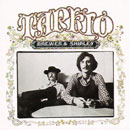
Their next album, Tarkio, boasted a similar sound, again with the help of
session players and Gravenites. The most celebrated guest appearance was by
Jerry Garcia, who contributed pedal steel guitar. "Wally Heider's studio in
San Francisco had a bunch of the Bay Area [musicians] in there every day,"
says Brewer. "It was like going into the office. The Dead was in there every
day, or some offshoot of the Dead; the Airplane or offshoots were in there
every day, Hot Tuna or whoever. We knew a lot of them from back in the folk
days. I met Paul Kantner when he played banjo and had a flat-top haircut, so
we went back a ways with some of these people. Jerry had just started
playing pedal steel guitar. He came in one day, and we were working on some
stuff. We said, 'Hey Jerry, we got a song here, would you like to play pedal
steel?' And he said, 'Sure." So he set up his pedal steel and played on a
song called 'Oh Mommy, I Ain't No Commie' -- the B-side to 'One Toke Over
the Line.'"
As can be gleaned from
those song titles alone, there was an increasing reflection of the turbulent
times in the lyrics. Tracks like "Fifty States of Freedom," "Don't Want to
Die in Georgia," "Tarkio Road," and "Song from Platte River" mused on both
freedom and the restrictions placed upon it for many young people circa 1970
who were redefining personal expression in the United States. "Our music has
always been somewhat autobiographical, reflecting our own experiences at the
time," explains Brewer. "Our first three albums are like mini-time capsules
in retrospect. Vietnam was still raging, and a lot of social unrest. We were
experiencing that along with a lot of other people. I think that's why a lot
of people could relate as well as they could to the music.
|
|